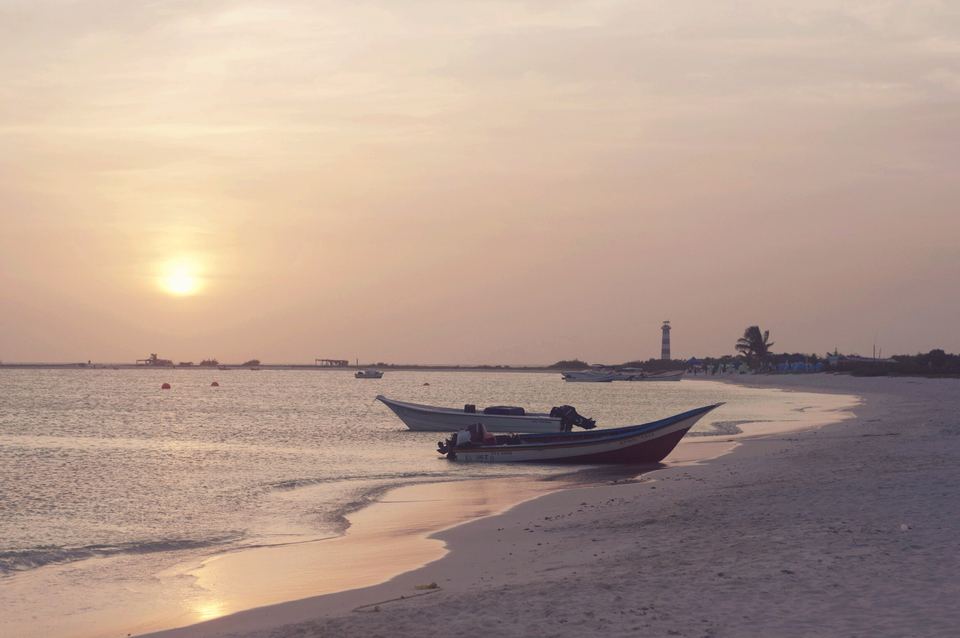

La Tortuga is reached by sea, and almost everything you need on the island travels with you or is provided by your camp.
When to go
The trade wind blows from the east-north-east all year. According to ERA5 reanalysis data (2016–2025), it is strongest and steadiest from January to April and lightest from August to October, which is also the wettest period. Kitesurfers come for the windy months; if you prefer gentler breezes, choose August to October.
- Shorebirds: between August and December, hundreds of migrating shorebirds reach the lagoons.
- Lobster: the fishing season peaks from November to April.
- Arrival days: the 2013 resolution only lets private and tourist boats arrive on Fridays, Saturdays and Sundays. That is why almost every package runs Friday to Sunday.
See the live forecast and the monthly table on Weather & Sea.
A camping weekend or a day visit
The most common way to see the island is a camp package of 3 days and 2 nights, Friday to Sunday, departing from Higuerote. Camps advertise the boat transfer, all meals, chairs and shade, a covered dining area, drinking water and fresh water for a quick shower; some add cabins or Bali beds with air conditioning, electricity and wifi. One operator lists a 7:00 departure from Higuerote and a 10:00 return from the island on the last day.
From Higuerote the crossing takes about 3 hours by sport boat, 4 by standard launch and 6 by passenger yacht, according to operators; in a choppy sea, 3½ to 4½ hours in a fast launch. We have found no day trips published in detail: if you want one, ask the operators in the directory or a charter company.
What it costs
Prices vary by operator, boat and season. For reference, packages published in October 2026 run from about US$370 to about US$500 per person:
- Campamento Barlotur: 3 days and 2 nights from Higuerote, US$370 to $430 depending on the boat; its "glamping" option, US$500.
- Viajes Océano Azul: 3 days from Higuerote, from US$420.
- Chelonia Eco Village, the eco-hotel at Punta Delgada, is the luxury option: in February 2024 the press reported US$500 per person per night including transfer, and US$1,380 for 3 days and 2 nights.
Prices change often. Always confirm the price, what is included and the cancellation terms with the operator.
What to pack
- Plenty of sun protection: sunscreen, a hat or cap.
- Insect repellent.
- A warm layer or something cosy to sleep in: nights are breezy and cool.
- Seasickness tablets if you are prone to it, taken the night before and on the morning of departure.
- A reusable insulated cup: some camps don’t hand out plastic cups.
- Your own food if you follow a special diet; menus are mostly fish.
- Light luggage.
More practical tips on Getting There.
Island rules
La Tortuga, Los Tortuguillos, Cayo Herradura and Los Palanquines are Zones of Public Utility and Tourist Interest. The joint resolution of the tourism and interior ministries published in Gaceta Oficial No. 40,259 (2013) set these rules, to run for up to two years:
- Visitor areas: Playa Caldera, Punta Delgada and Cayo Herradura, with at most 500 visitors a day (150, 250 and 100 respectively).
- Anchoring: at Cayo Herradura and Playa Caldera, 50 m from shore.
- Rubbish: all of it goes back to the mainland. Port captains are to hand each boat at least five 60-litre bags, to be returned full.
- Prohibited: jet skis and motorised water sports, campfires, and discharging sewage or waste.
- Aircraft: landing by private and commercial aircraft is restricted.
- Operators: tourist boat services must hold licences from the Ministry of Tourism and INEA.
Breaking the rules can bring penalties and removal from the island. We have not been able to confirm whether it was extended or which rules apply today: ask your operator or the port captain before you travel. If you sail your own boat, check the paperwork on Getting There.